Curating a Library That Tells Your Story
On building a personal collection that functions as autobiography written in cloth, paper, and leather.
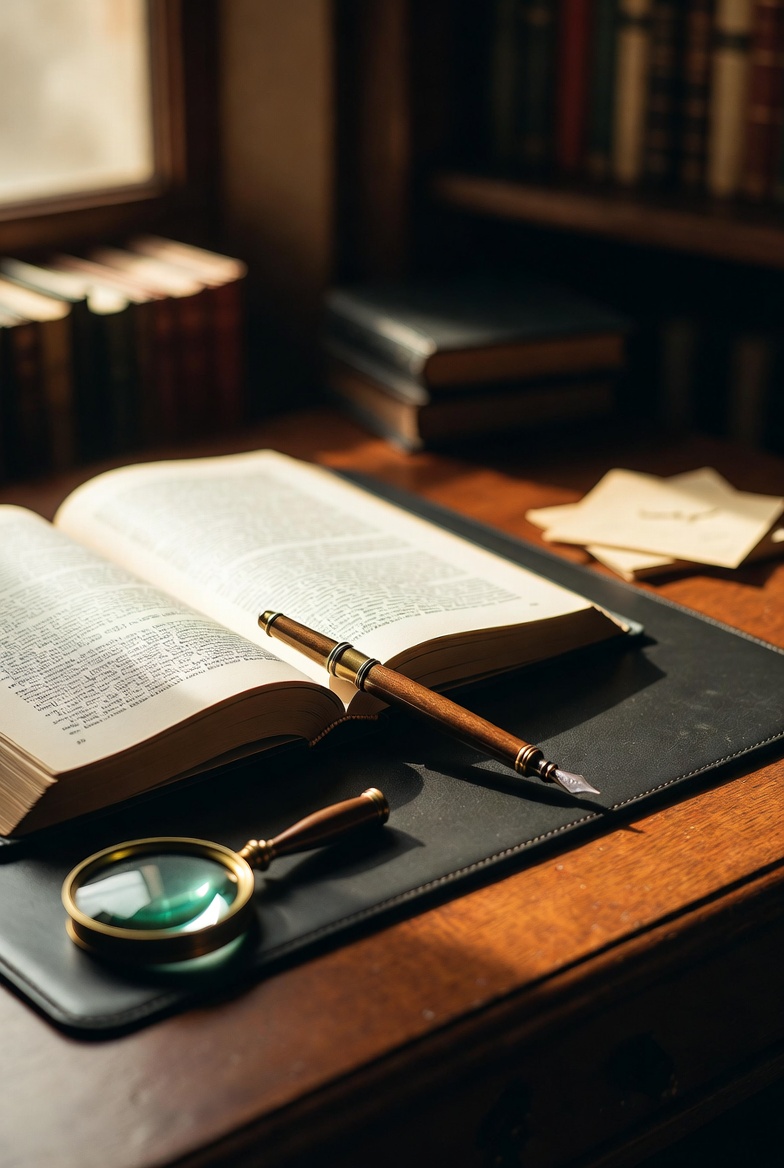
A personal library is never merely a collection of books. It is a three-dimensional autobiography assembled one volume at a time, often without the keeper fully realizing what story is being told. The books we choose to keep and the order in which we keep them describe our obsessions, our travels, our intellectual debts, and the versions of ourselves we have quietly outgrown.
When I look at my own shelves, I see not only titles but chapters of my life. There is the row of books acquired during a period of intense interest in the history of printing. Another section holds volumes that traveled with me through several cities and still carry the faint scent of those rooms. Certain books appear together because they were read in the same season, even if their subjects have little in common. The arrangement is less a catalog than a map of attention over time.
The Books That Remain
The most revealing libraries are not the largest. They are the ones that have been edited with care over many years. Every volume that stays has earned its place through repeated use or through its ability to converse with its neighbors. The books that are given away or sold are not failures; they are simply chapters that have closed. Keeping everything eventually flattens the story into a mere inventory.
I have noticed that the books I return to most often occupy the shelves closest to the chair where I actually read. These are not always the most important or most beautiful volumes in the collection. They are the ones whose spines have softened and whose pages fall open to favorite passages without prompting. They have become part of the furniture of daily life rather than objects preserved for occasional consultation.
Arrangement as Autobiography
Alphabetical order by author surname is efficient for retrieval but erases almost everything interesting about a collection. When books are arranged according to temperament and affinity, unexpected and illuminating adjacencies appear. A volume of essays on typography finds itself beside a novel whose author clearly cares about the same questions of craft. A memoir of a journey sits next to a work of fiction set in the same landscape decades later. These pairings are not accidents; they are the result of a long, slow process of listening to what the books themselves suggest.
The library that tells the truest story is the one that is never quite finished. New volumes arrive and old ones are moved to make room. Some sections grow dense while others thin out. The keeper returns again and again to the same shelves, not because anything is missing, but because the arrangement itself continues to reveal new connections. This is the opposite of a static collection meant to impress visitors. It is a living record that changes as its keeper changes.